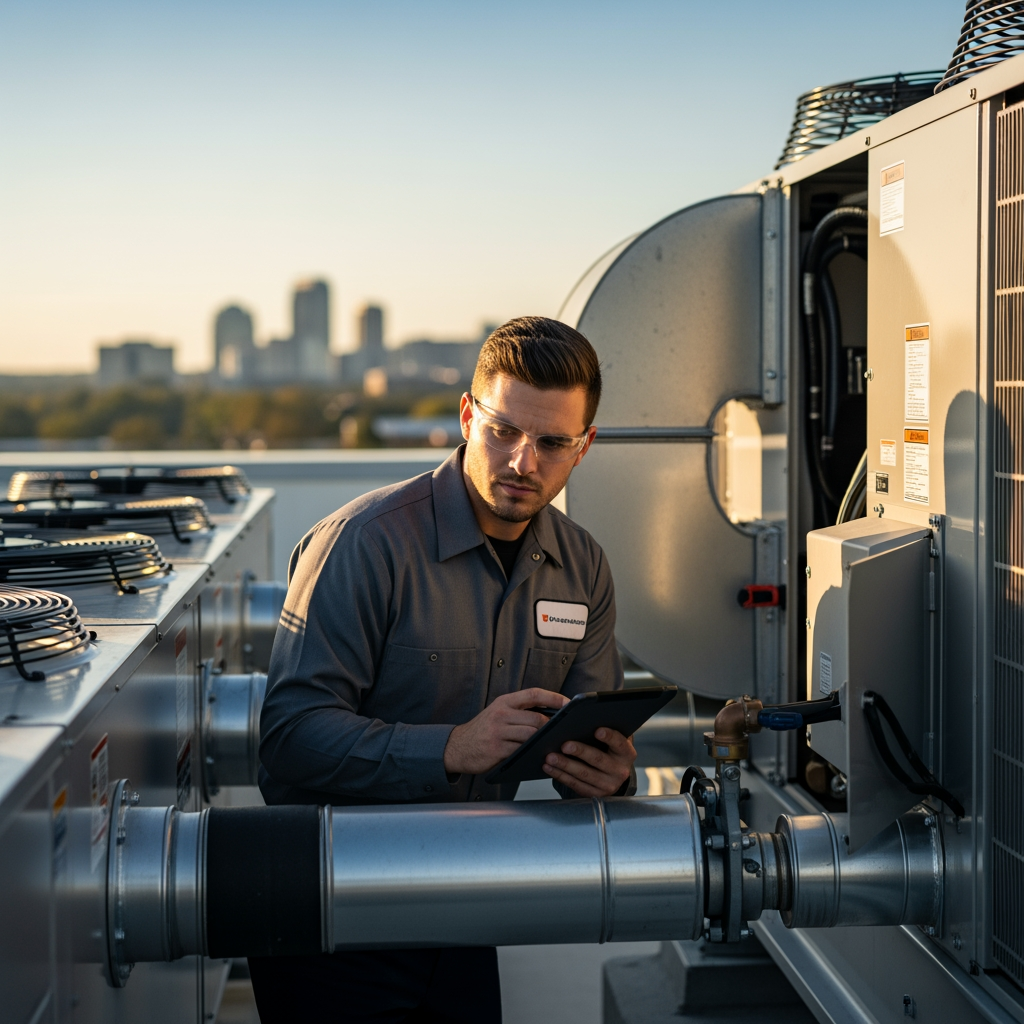
I know how quickly a poorly performing rooftop unit or an aging boiler can derail a workday, which is why I always start with practical, proven steps when searching for commercial HVAC services in Austell, GA. For a quick snapshot of the local population and business density that affect building energy needs, the U.S. Census Bureau has helpful regional data that I check early in any planning process U.S. Census Bureau.
Why commercial HVAC matters in this area
Austell sits in a climate that swings from hot, humid summers to mild winters, so HVAC systems are critical year-round. For many local businesses—offices, retail, warehouses, and restaurants—HVAC is one of the largest and most controllable operating expenses. The right commercial HVAC services reduce energy waste, limit unexpected downtime, and protect employee comfort and productivity. Over time, a smart approach to HVAC can pay for itself through lower utility bills and fewer emergency repairs.
Core commercial HVAC services you should expect
When I evaluate providers for commercial work, I look for a clear set of capabilities. A contractor focused on the needs of local businesses will typically offer:
- System installation and replacement for rooftop units, packaged systems, split systems, and boilers
- Preventive maintenance plans and scheduled tune-ups that keep warranties valid
- Commercial refrigeration and specialty climate control for food service and storage
- Controls and building automation upgrades including digital thermostats and BAS integration
Those services keep the essential systems running and give building owners options for performance upgrades without unnecessary disruption.
Signs your commercial HVAC needs immediate attention
Businesses sometimes ignore small problems until they become big, costly emergencies. I usually flag a vendor visit when I see one or more of the following in a building:
- Uneven comfort across zones with large temperature swings between offices and common areas
- Rising energy bills without meaningful changes in occupancy or hours
- Loud compressors, persistent short cycling, or frequent tripping of breakers
- Visible leaks, odors, or compressor issues that indicate failing components
Addressing these early with a qualified technician saves money and extends equipment life.
Trending solutions that Tampa businesses and others are adopting
Two trends I recommend watching closely are electrification of heating equipment and smarter controls. Heat pumps and variable refrigerant flow (VRF) systems are becoming mainstream for commercial retrofit projects because they can reduce fuel use and perform efficiently in our climate. At the same time, building owners are adding cloud-connected controls that allow remote monitoring, predictive maintenance alerts, and occupancy-based scheduling. These changes help lower energy demand and reduce emergency calls.
Indoor air quality and health-driven upgrades
Indoor air quality remains a top priority for tenants and customers. Upgrades such as MERV-rated filtration, UV germicidal lights in air handlers, and proper ventilation balancing can make indoor spaces safer and more comfortable, especially in high-traffic areas. These upgrades also tend to improve tenant retention and worker satisfaction.
How I evaluate a commercial HVAC contractor
Not every contractor is prepared for commercial-scale work. When I vet a team for a project in the city, I follow a short checklist to separate vendors who can handle complex systems from those who cannot. You can use this checklist too.
- Licensing and insurance that match the scope of work for commercial projects
- Documented experience with similar building types and equipment brands
- References and recent case studies showing reduced operational costs or downtime
- Clear maintenance plans and response-time guarantees for emergencies
Asking for a site visit and a written, itemized estimate helps you compare proposals apples to apples. Make sure each estimate spells out equipment efficiencies, projected energy savings, and expected lead times for parts or replacements.
Practical steps to lower your HVAC operating costs
Over the years I’ve helped building owners prioritize measures that give the biggest returns first. These are not dramatic renovations—just disciplined, tactical moves that reduce load and improve efficiency.
- Start with a professional energy audit focused on HVAC to identify immediate savings
- Implement tiered preventive maintenance to keep equipment operating at rated efficiency
- Install programmable or smart scheduling for unoccupied hours and weekend setbacks
- Seal ductwork and insulate mechanical rooms to prevent thermal losses
These straightforward steps often reduce peak demand and lower monthly bills without huge capital investment.
What a good preventive maintenance plan looks like
Preventive maintenance should be proactive, not reactive. I recommend plans that include seasonal inspections, filter replacement schedules, coil cleaning, refrigerant checks, and control calibration. For many businesses, a tiered plan that includes regular site visits plus a guaranteed emergency response window delivers the best balance of cost and reliability. Remote monitoring options that send alerts for pressure, temperature, or runtime anomalies are especially useful for spotting issues before they become failures.
How to prepare your building before an HVAC upgrade
Before you sign a contract for a major replacement or retrofit, get these items in order. They make the project smoother and can sometimes lower installation costs.
- Review existing mechanical drawings and past service records
- Address roof or structural issues if installing rooftop equipment
- Coordinate with tenants on staging and access to minimize disruption
- Confirm utility metering and incentive eligibility early in the planning phase
Preparing ahead reduces surprises and keeps projects on schedule, which matters in busy commercial neighborhoods across Austell and surrounding areas.
Common questions I hear from property managers
How often should commercial equipment be serviced
Most commercial HVAC units benefit from at least two seasonal inspections per year: one before the cooling season and one before heating. High-use or critical systems may require quarterly checks. Following manufacturer recommendations protects warranties and keeps equipment performing efficiently.
Will smart controls really save money
Yes, when installed and commissioned properly. Smart controls reduce wasted runtime, allow temperature setbacks during off-hours, and enable demand response strategies that cut peak charges. The key is proper system setup and training so the controls are used effectively.
How long does a rooftop unit replacement typically take
Replace timelines vary by size and complexity, but many commercial rooftop unit swaps can be completed in a single long workday to a few days. Larger projects with ductwork or control integration can take longer. A qualified contractor will provide a clear timeline and a plan to minimize business disruption.
How local businesses benefit from trained local technicians
Hiring technicians who know Austell, nearby neighborhoods such as Mableton and Powder Springs, and the common building types in this area has real advantages. Local teams understand typical installation challenges, frequently used equipment, and local permitting requirements. They also respond faster for emergency calls and often maintain relationships with local suppliers, which speeds up parts procurement. When I recommend service providers, responsiveness and local knowledge are two of the highest-value criteria.
Preparing for future trends and incentives
As you plan capital projects, consider how emerging trends might affect the best path forward. Electrification and heat pump technology will likely grow in the coming years, and cloud-based controls will continue to offer better data for operations. In some cases, federal or state incentives for energy-efficient equipment or improved building performance can offset upfront costs; discussing potential incentives with your contractor during the design phase is worth the time.
Final checklist before you sign a contract
Before committing to a contractor, make sure the proposal includes the following items. They protect your investment and ensure the work meets expectations.
- A clear scope of work with equipment specifications and performance guarantees
- Warranty terms for both parts and labor and the owner responsibilities to maintain warranties
- A timeline with milestones and a plan for minimizing tenant disruption
- Post-installation commissioning and training for your facilities staff
These contract details make it easier to hold a vendor accountable and ensure the project delivers the promised savings and reliability.
I’ve worked with building owners across the region to turn HVAC from a chore into a predictable, controllable part of operations. If you want a partner who understands commercial systems in Austell and can provide clear, local solutions, visit HHMEC to learn more and schedule a consultation.